linuron 50% WP
Products Description
Basic Information
Common Name: Linuron
CAS No.: 330-55-2
Synonyms: 3-(3,4-dichlorophenyl)-1-methoxy-1-methylurea; Methoxydiuron; Cephalon; Afalon; Aphalon; Linurex; Lorox; Sinuron; Garnitan; Herbicide 326; Linorox; Rotalin; Sarclex
Molecular Formula: C₉H₁₀Cl₂N₂O₂
Agrochemical Type: Herbicide
Mode of Action: Linuron is a selective, systemic herbicide with contact and residual action. It inhibits photosynthesis by blocking electron transport at the photosystem II receptor site. By binding to the D1 protein, it interrupts the photosynthetic electron transport chain, preventing plant growth and leading to cell membrane destruction.
Formulation: Linuron 50% WP;
Linuron 450g/L SC.
Specification:
|
ITEMS |
STANDARDS |
|
Product name |
Linuron 50% WP |
|
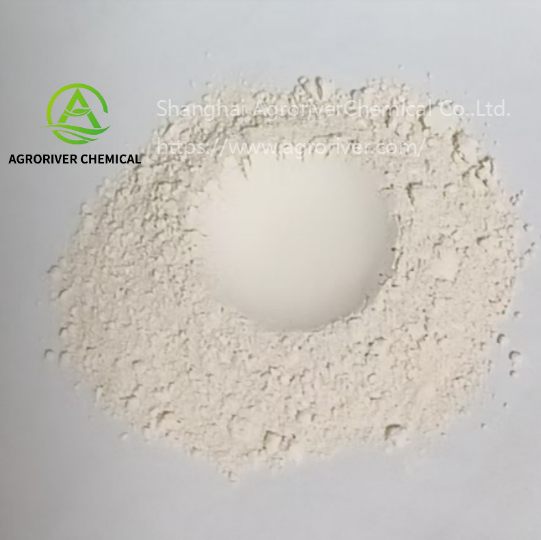
Appearance |
White powder |
|
Content |
≥50% |
|
Moisture content |
≤ 3.0% |
|
pH |
6.0~9.0 |
|
Water insolubles, % |
≤ 1% |
|
Wetting time |
≤ 2 min |
|
Suspensibility |
≥ 40% |
|
Solution stability |
Qualified |
|
Stability at 0℃ |
Qualified |
Packing
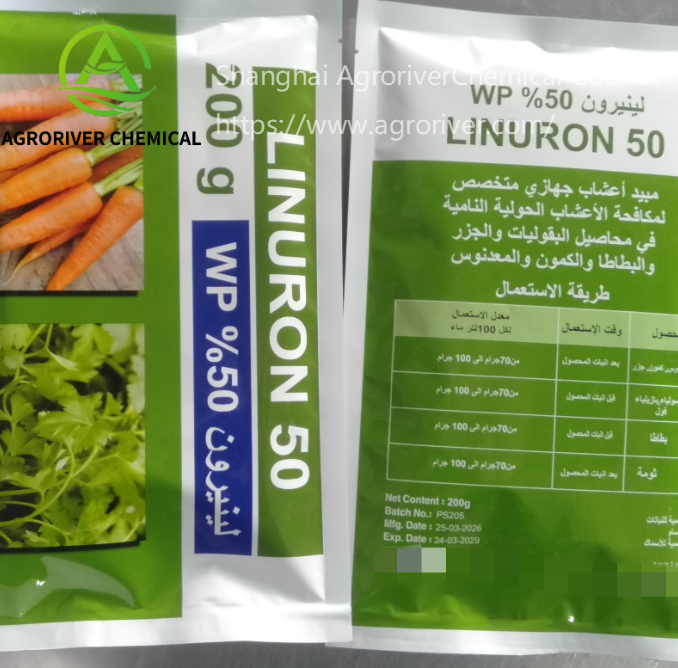
25kg paper bag, 1kg alum bag, 100g alum bag, etc. or according to customer's requirement.
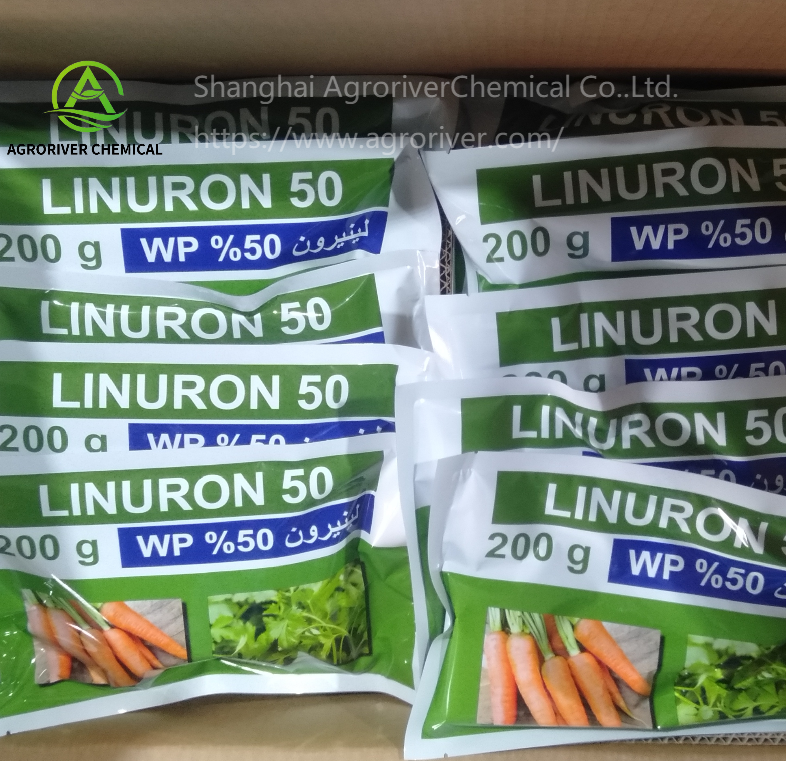
Application
Linuron 50% WP is a selective, systemic herbicide with contact and residual action, belonging to the substituted urea class. It is absorbed principally by the roots but also by the foliage, with translocation primarily acropetally in the xylem. Linuron inhibits photosynthesis by blocking electron transport at the photosystem II receptor site (Site A). By binding to the D1 protein (a subunit of the PSII complex) at the plastoquinone QB binding site, it interrupts the photosynthetic electron transport chain, preventing plant growth and leading to cell membrane destruction.
It is suitable for pre- and post-emergence control of annual grass and broad-leaved weeds, and some seedling perennial weeds. It can be used on a wide variety of crops including asparagus, carrots, cereals, onions, potatoes, soybeans, sweet corn, maize, cotton, flax, sunflowers, and others.
For pre-emergence application in carrots and parsnips, the dosage is 2.2–4.5 kg of formulated product per hectare depending on soil type; for post-emergence application, the dosage is 1.1–2.2 kg/ha. Do not apply to light sandy soils low in clay or organic matter.
Do not replant treated areas to other crops within 3 months of application.